
Bullying
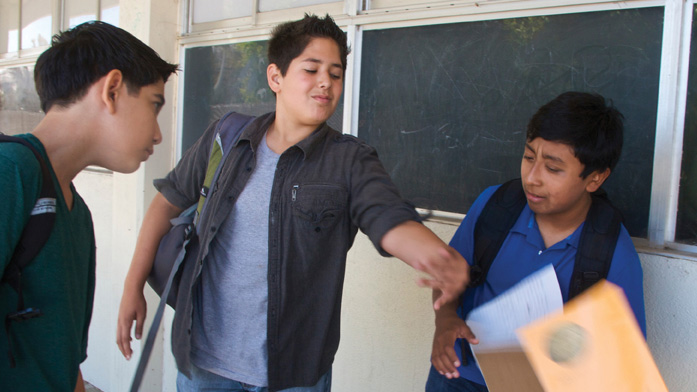
Say 'NO' to Bullying
If you think your child is being bullied, get help right away:
- Tell a teacher, school administrator or counselor.
- Encourage your children to talk to you.
- Reach out to a community organization or other parents.
See resources at the Ventura County Office of Education.
Resources include Restorative Justice which holds students accountable for their actions and behavior while at the same time building a nurturing school environment.
WHAT IS BULLYING?
Many children experience bullying at school.
The U.S. Health Resources and Services Administration (HRSA) defines bullying as “aggressive behavior that is intentional and involves an imbalance of power or strength.” The HRSA also states, “bullying prevention requires buy-in from teachers, parents and administrators.” A child must be supported at school and at home in order to be safe from bullying.
There are many ways one child can bully another and they are all harmful to the well-being of a child. Bullying includes constant teasing in a hurtful and unkind way, threats of violence, property damage, theft of money or valued possessions, and physical, verbal and psychological torment.
Bullying must be addressed as soon as parents are aware of it or it can cause serious psychological and developmental damage to a child. It can lead to a loss in self-esteem and, in the worst cases, bullying may cause so much distress that a child commits suicide. Children may not tell parents or school officials themselves if they are being bullied. It is important to watch your child for changes in behavior that are known signs of being bullied. If your child displays signs of anxiety or depression or changes in personality such as fear or sudden avoidance of social settings, talk to them as soon as possible to find out what is going on in their lives. Stay calm as you listen to your child. Empathize with your child and thank them for sharing their situation with you. The intervention of an adult can almost always stop bullying and prevent more serious harm. See Bullying Warning Signs and How to Help if Your Child is Being Bullied.
The cause of bullying may be that the bully is imitating aggressive behavior they experience at home from parents or siblings who exert authority through verbal and physical force, perpetuating a cycle of abuse. They may be imitating media violence or rough behavior they see on television, on the internet, or in video games. Bullies may be trying to show their dominance over weaker children in order to gain popularity or a sense of control at school. No matter the reason, bullying is wrong and cannot be stopped by the child alone. Adults must step in and protect a child if they are being bullied.
Bullying is also not good for the child perpetrating the behavior. See What if My Child is a Bully?
Click below to download the fotonovela "What can we do about bullying? José Luis's Story".